
Alcohol Withdrawal: Symptoms, Treatment, and Prognosis
Key Takeaways
- Alcohol withdrawal symptoms can start within 6 to 24 hours after stopping alcohol and range from mild (headache, anxiety) to severe (seizures, delirium).
- Heavy and long-term drinking increases the risk of withdrawal, with about 50% of heavy drinkers experiencing symptoms when they stop.
- Medical treatment options include benzodiazepines, anticonvulsants, and supportive care to manage symptoms safely.
- Severe withdrawal symptoms like seizures, hallucinations, or delirium tremens require immediate medical attention.
- Preventing withdrawal complications involves gradual alcohol reduction (tapering) or supervised detox under medical guidance.
Table of Contents
Alcohol is a regular part of life for many people—at parties, dinners, or just to unwind after work. In fact, about 62% of adults in the U.S. say they drink alcohol sometimes, according to a recent Gallup survey. But for some, occasional drinking gradually becomes a habit that’s hard to break.
Especially because, over time, your body gets used to having alcohol regularly. When you suddenly stop, you might experience a mix of physical and emotional symptoms that make quitting even harder.
That’s why it’s so important to know the early signs of withdrawal, understand your treatment options, and recognize when it’s time to get medical help. Being aware of these things can make your recovery safer and help you avoid serious complications.
What Is Alcohol Withdrawal?
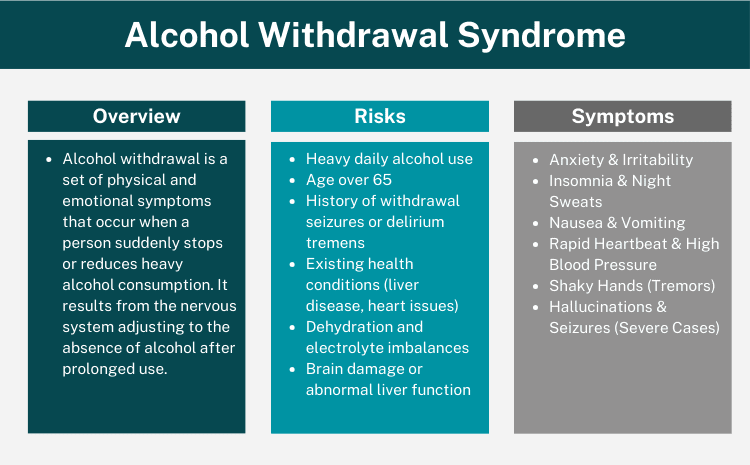
Alcohol withdrawal (alcohol withdrawal syndrome) is a set of symptoms that happen when a person suddenly quits or sharply reduces alcohol after heavy, long-term drinking. In other words, it’s how your body reacts when it no longer receives the alcohol it has grown accustomed to.
How Common Is Alcohol Withdrawal?
Alcohol withdrawal happens more often than many people realize. If someone has been drinking heavily and decides to cut back or stop, there’s about a 50% chance they’ll experience withdrawal symptoms. It’s not rare or unusual—millions of adults in the U.S. have alcohol use disorder, making it one of the most common substance-related issues in the country.
In fact, nearly 29 million American adults struggle with alcohol dependence or misuse. That means a significant number of people could potentially face withdrawal when trying to quit drinking.
Causes and Risk Factors of Alcohol Withdrawal
What Causes Alcohol Withdrawal?
Alcohol affects your body by slowing down your central nervous system (CNS), which controls functions like your heartbeat, breathing, and how you respond to stress. If you drink heavily over a long period, your CNS starts adjusting to the constant presence of alcohol. To keep functioning normally, it has to work extra hard to counteract alcohol’s slowing effects.
When you suddenly stop drinking, your nervous system doesn’t have time to catch up. Without alcohol to balance things out, your CNS goes into overdrive, triggering withdrawal symptoms like anxiety, shaking, and confusion.
Think of your nervous system like a car engine. Alcohol is like a brake pedal that you’ve been pressing constantly, forcing the engine (your nervous system) to rev harder to keep going. If you suddenly lift your foot off the brake, the engine speeds up uncontrollably. That’s similar to what happens in alcohol withdrawal—your body struggles to handle the sudden increase in nervous system activity.
Drinking Habits and Withdrawal Risk
It’s tough to know exactly who will experience alcohol withdrawal or how severe it might be. Guidelines from the National Institute on Alcohol Abuse and Alcoholism (NIAAA) define heavy drinking as five or more drinks per day for men and four or more for women. But these numbers are general guidelines, and individual risk can vary widely.
Your likelihood of having withdrawal symptoms depends on many personal factors. Things like your age, body chemistry, medications, mental health, and whether you use other substances all play a role. Everyone’s body reacts differently, making it difficult to predict exactly what you might experience.
Still, research shows certain factors increase the risk of severe alcohol withdrawal:
- Heavy daily alcohol use
- Age older than 65
- Previous episodes of seizures or delirium tremens during withdrawal
- Existing health issues, such as liver or heart conditions
- Dehydration
- Electrolyte imbalances
- Brain damage or lesions
- Abnormal liver function
Recognizing Symptoms of Alcohol Withdrawal
Alcohol Withdrawal Symptoms
Signs and symptoms of alcohol withdrawal happen quickly, usually within 6 to 24 hours after you stop drinking or cut back significantly. Symptoms can range from mild discomfort to more serious problems, depending on how long and how heavily you’ve been drinking. Everyone experiences withdrawal differently, but recognizing the common signs early can help you prepare.
Typical withdrawal symptoms include:
- Headache
- Anxiety, nervousness, or irritability
- Trouble sleeping (insomnia)
- Excessive sweating
- Upset stomach or nausea
- Heart palpitations (rapid heartbeat)
- Increased blood pressure
- High body temperature (hyperthermia)
- Shaky hands or tremors in other body parts
- Confusion or difficulty thinking clearly
- Seeing or hearing things that aren’t there (hallucinations)
- Seizures
- Severe confusion, agitation, and disorientation (delirium)
Knowing these signs can help you stay safe and get medical help quickly if symptoms become severe.
How Long Do Alcohol Withdrawal Symptoms Last?
The timeline for alcohol withdrawal symptoms can vary widely depending on the person, but it usually follows a predictable pattern:
- 6 to 12 hours after your last drink: Mild symptoms appear first. You might experience headaches, anxiety, restlessness, or trouble sleeping.
- Within 24 hours: Symptoms often become more intense. Hallucinations—seeing or hearing things that aren’t actually there—can start, especially in severe cases.
- 24 to 72 hours after your last drink: Withdrawal usually peaks during this period:
- 24 to 48 hours: There’s a higher risk of seizures, especially after heavy alcohol use.
- 48 to 72 hours: Delirium tremens, a severe and dangerous condition involving intense confusion, agitation, and hallucinations, can occur.
- After 72 hours: Most severe symptoms start improving. However, lingering issues like anxiety, mood swings, and insomnia might continue for several weeks or even months as your body slowly recovers.
Diagnosis of Alcohol Withdrawal
If you suspect you’re experiencing alcohol withdrawal, a healthcare provider can confirm the diagnosis through several straightforward methods. They’ll usually start by asking about your drinking habits and medical history. It’s important to be honest about how much you’ve been drinking and if you’re using any other substances. This openness ensures your doctor can give you the safest, most effective treatment.
Your provider will also do a physical exam to check for signs of withdrawal, like shaking hands or rapid heartbeat. They might recommend additional tests to get a clearer picture of your overall health. These tests often include blood work and possibly an electrocardiogram (EKG) to monitor your heart.
Because long-term alcohol use can cause various health issues, your doctor may check specifically for:
- Dehydration and electrolyte imbalances
- Possible injuries or infections
- Problems with liver function
- Heart issues, such as irregular heartbeat
- Gastrointestinal (GI) bleeding
Early diagnosis and treatment can help you manage symptoms more comfortably and safely, minimizing the risk of serious complications.
Alcohol Withdrawal Treatment Options
Choosing Between Home and Medical Treatment
Managing alcohol withdrawal safely often requires different approaches, depending on how serious your symptoms are. For mild withdrawal, a supportive environment can be enough. You might just need a calm place to rest, nutritious food, plenty of fluids, and regular check-ins with your healthcare provider. Counseling sessions—either one-on-one or in groups—and support networks like Alcoholics Anonymous can also make the process smoother.
Moderate cases usually need a bit more attention. Your doctor might prescribe short-term medications to ease uncomfortable symptoms. They’ll probably want to see you more often to make sure things are progressing safely.
If your withdrawal is severe, doctors usually recommend inpatient treatment. Staying overnight in a medical facility ensures you have constant support from professionals who can manage your symptoms around the clock. This greatly reduces the risk of serious complications like seizures or delirium tremens.
Inpatient treatment typically includes:
- Medical detox: Doctors provide medications to help control withdrawal symptoms during the first few days.
- Counseling and therapy: You’ll work with therapists or counselors to better understand and manage emotional triggers and underlying mental health issues. Family involvement can also be beneficial.
- Learning new habits: Specialists might teach you healthier coping strategies, including stress management and nutrition planning.
- Ongoing medical monitoring: Staff continually monitor your physical health to address any complications early.
- Continuing care planning: Before you leave, your treatment team connects you with local support groups, doctors, or therapists to help maintain your recovery long-term.
Choosing the right treatment can make the difference between a successful recovery and ongoing struggles. It’s important to talk openly with your healthcare provider about what options fit best for you.
Medication for Alcohol Withdrawal
Medication can play a crucial role if your alcohol withdrawal symptoms become uncomfortable or dangerous. Doctors often prescribe medication when symptoms go beyond mild anxiety or restlessness. These medications help reduce severe symptoms, prevent serious complications like seizures, and make the process more manageable overall.
Using Benzodiazepines for Withdrawal Treatment
Doctors typically turn first to benzodiazepines when treating alcohol withdrawal. These medications act as sedatives, helping to calm your brain by balancing chemical levels. They also reduce your risk of severe complications like delirium tremens.
Common benzodiazepines include:
- Chlordiazepoxide (Librium)
- Diazepam (Valium)
- Lorazepam (Ativan)
- Oxazepam
You might receive these medications orally, or your doctor may provide a longer-lasting intravenous (IV) version if you’re hospitalized.
Anticonvulsants in Alcohol Withdrawal Treatment
Anticonvulsants are another class of medications often used to control withdrawal symptoms. They help lower your risk of seizures, a common and dangerous complication during withdrawal. Carbamazepine is one example commonly used for this purpose. Your doctor may prescribe anticonvulsants alone or alongside benzodiazepines to offer extra protection against seizures.
Antipsychotics for Alcohol Withdrawal
Antipsychotic medications aren’t commonly prescribed for everyone going through withdrawal, but they can help in certain cases. These drugs are typically reserved for severe symptoms like intense hallucinations, extreme confusion, or aggression. If your doctor prescribes antipsychotics, they’ll closely monitor you due to possible side effects.
Clonidine for Alcohol Withdrawal
Clonidine, often combined with medications called beta-blockers, can help manage symptoms related to blood pressure and heart rate. Withdrawal can cause your heart rate and blood pressure to spike dangerously. Using clonidine alongside other medications can keep these vital signs at safer levels, making withdrawal less risky and more comfortable.
Complications of Alcohol Withdrawal
Severe or complicated alcohol withdrawal can quickly become dangerous and often requires immediate medical care. In these situations, your doctor will likely recommend hospitalization. You might even need treatment in an intensive care unit (ICU), so healthcare providers can keep a close eye on your condition and respond immediately if complications arise.
During your hospital stay, medical staff will regularly monitor your vital signs, like your heart rate and blood pressure. This constant monitoring helps prevent life-threatening situations, such as seizures or severe delirium tremens. They’ll also watch for signs of other health issues linked to heavy drinking, including liver problems, heart complications, and electrolyte imbalances.
In addition to managing withdrawal symptoms, doctors may provide treatments for these related health conditions. Addressing these issues during withdrawal increases your chances of a smoother recovery and reduces the risk of long-term complications.
Treatment for Alcohol Use Disorder
In some cases, your doctor might recommend treatment specifically aimed at managing alcohol addiction after you’ve completed withdrawal. While detox helps you handle the immediate effects of stopping alcohol, treatment for AUD focuses on the root causes of your drinking and helps prevent relapse.
AUD treatment often combines medication, counseling, and support groups. Medications like naltrexone or acamprosate can help reduce cravings and make it easier to stay sober. Counseling, either one-on-one or in groups, helps you understand your relationship with alcohol, recognize triggers, and build healthier habits. Support groups, such as Alcoholics Anonymous, offer ongoing community and accountability.
Together, these approaches provide long-term support, making it easier to maintain sobriety and prevent future withdrawal episodes.
Effective Prevention Strategies for Alcohol Withdrawal
The safest way to prevent alcohol withdrawal is to avoid heavy drinking in the first place. But some people consider gradually reducing their alcohol intake, a method called tapering. With tapering, you slowly decrease how much alcohol you drink over several weeks or even months. The goal is to help your body adjust gently to lower alcohol levels, potentially reducing withdrawal symptoms.
Still, tapering doesn’t always prevent withdrawal entirely. It’s important to talk to your doctor or an alcohol treatment specialist before starting this approach. They can help you decide if tapering is right for you and ensure you have a safe, effective plan in place.
When to Seek Help During Withdrawal
Alcohol withdrawal symptoms can sometimes escalate quickly, turning into a medical emergency. It’s crucial to recognize when symptoms are serious enough to require immediate help.
Seek emergency medical attention right away if you experience:
- Seizures or convulsions.
- Severe confusion or trouble thinking clearly.
- Hallucinations.
- Persistent vomiting or inability to keep liquids down.
- Chest pain or difficulty breathing.
- High fever or uncontrollable shaking.
- Extreme agitation or panic.
These symptoms indicate that your withdrawal is becoming severe and potentially life-threatening. Getting immediate medical attention can significantly improve your safety and recovery outcomes. Don’t wait to see if symptoms improve on their own—if you’re uncertain, call for help right away.

Patrick Bailey
I am a professional writer, mainly in the fields of mental health, addiction, and living in recovery. I attempt to stay on top of the latest news in the addiction and the mental health world and enjoy writing about these topics to break the stigma associated with them.
Patrick Bailey
I am a professional writer, mainly in the fields of mental health, addiction, and living in recovery. I attempt to stay on top of the latest news in the addiction and the mental health world and enjoy writing about these topics to break the stigma associated with them.